Have you wondered how to keep a chicken run from turning to mud? If you’ve ever walked into your chicken run after a good rain, you’ve probably noticed a thick muddy mess.
Chickens are great at getting rid of anything organic and leaving only the mud behind.
The good news is you don’t have to live with that mess, and it doesn’t require an expensive solution. Find out how to keep your chicken run from turning to mud.
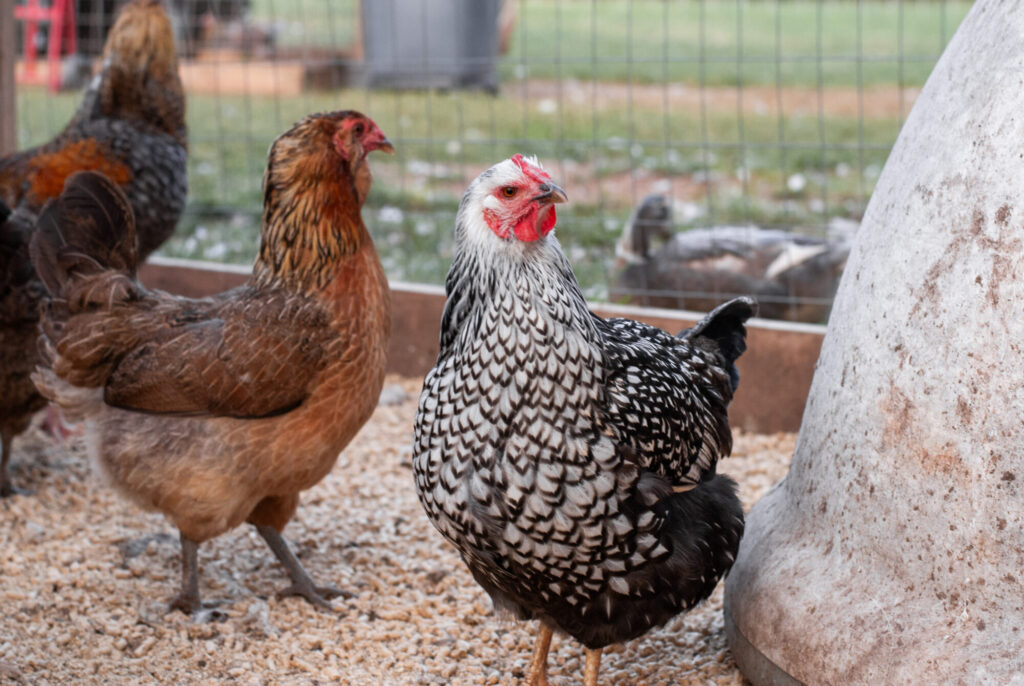
Chickens are great at creating mud. They scratch the ground constantly and remove any organic vegetation and material.
They also create a lot of moisture manure, make a mess with their waterers, and are generally messy animals.
Once the ground is bare, the rain can better penetrate it causing mud.
I used to live with a chronically muddy chicken run.
After a few years of just dealing with it, I figured out how to keep the chicken run from turning to mud without breaking the bank.
Turns out it has to do with drainage, slope, run covers, and the type of bedding you use.
Why Does My Chicken Run Turn Into Mud?
*This post may contain affiliate links which means I make a small commission at no extra cost to you. Read my full disclosure here.*
Rain and Poor Drainage
The run area of your coop is open to the elements which allows rain to seep in.
If your ground isn’t completely level it can develop low spots over time that hold water.
Chickens spend a lot of time moving around and can compact the soil under them.
Plant roots will naturally break up the soil allowing water to enter, but without natural vegetation the soil will compact down. This will keep the ground from absorbing the rain.
You might also have a coop roof that is allowing runoff to flow directly into the run creating a large amount of water concentrated into one spot.
These are just a few of the reasons why the rain is making your chicken run muddy.
Chickens Destroy Bare Ground Quickly
Chickens are great at scratching around for bugs, seeds, and other small plants they can eat. This is one of the many reasons that free-ranging is so great for them.
However, this completely natural behavior, when confined to a chicken run, will destroy all the vegetation and root systems very quickly.
Without plants to cover the ground or roots to help absorb the moisture, the top layer becomes mud.
High-Traffic Areas Get Muddy First
Areas where your chickens spend the most time will become muddy first.
Chickens love to congregate round feeders and waterers. You don’t have to own chickens for very long to figure out they love to make a mess with their waterers.
The areas where they are the most will become moist and muddy faster.
Other high traffic areas of the run like around the door or their favorite dust bathing areas will also become muddy a lot faster than less used areas. Think of it as a frequently traveled trail they have.
Your Chicken Run May Simply Be Too Wet
Some areas are just not great for a chicken run. I live in the deep south where we get a lot of rain annually.
Most summers it will rain daily. The constant rain makes it hard to keep any area dry.
Having an open run without a roof also creates an opportunity for heavy rainfall to penetrate your run.
It’s very hard to keep a run dry without some sort of roof system.
1. Fix the Drainage Before Adding Ground Cover
Water should flow away from your coop if you want to maintain a dry area.
While this seems fairly simple, it takes time to identify where the water is standing.
You also need to figure out where the water is coming from.
If you are getting a lot of water from your coop roof, you can consider adding down spouts or gutters with a collection container.
This is a great opportunity to add a rain barrel and repurpose the water for other areas around your coop.
If the ground is sloping towards your coop, you may need to install a channel where water can flow away.
This was the case with our particular run. We had to create a slope in the corner of our coop to direct water out and away from the run.
The last thing you want to do if your coop is holding water is throw a bunch of material in the run and hope for the best.
This can hold even more water and make a bigger mess. Address where the water is coming from first.
Should a Chicken Run Be on a Slope?
While placing your coop on a steep slope can create other issues, a gentle slope will help water run away from the coop.
Look for areas that have a slow slope and position your coop so that the water will flow away from the coop.
Don’t place your coop at the bottom of a hill or in a low area.
How to Drain a Chicken Run
If you are wondering how to improve drainage in a chicken run, there are several methods you can use.
While grading the run off is the best way, it’s not really cost effective unless you have the equipment to do it.
First identify the low lying areas, they create a drainage plan. There are several easy to stop water pooling in the chicken run:
- Use a shovel to manually remove dirt creating a slope away from the low-lying areas.
- Install a drainage pipe under the ground. You can dig a trench and install a pipe with a mesh cover. Be sure to cover both ends of the pipe so that predators don’t use it as an entry point.
- Install a DIY french drain. This is done by digging a trench away from the chicken run. Apply a water proof lining, and a PVC pipe with holes. Place the pipe in the bottom of the drain, and back fill with gravel. This will allow water to flow through to the drain below.
- Install a gutter system around the coop to keep rain water from running into the run. Attach a pipe to the down spout that will divert water away from the chicken coop.
2. Cover Part of the Chicken Run to Keep it From Turning to Mud
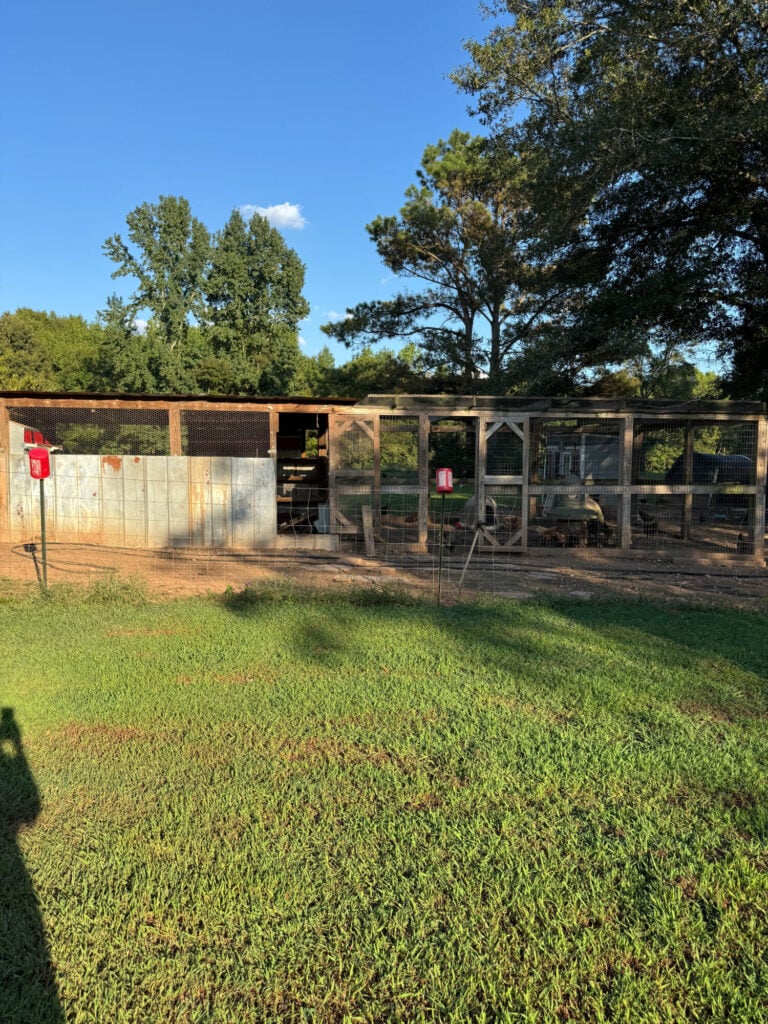
If you live in a particularly rainy climate like I do, covering the run may be the best option.
The truth is no amount of drainage systems or bedding can compete with daily rain.
Covering it can be expensive, but it is the best way to keep rain out of the chicken run.
There are several covered chicken run ideas you can entertain.
They are:
- permanent roof
- corrugated roofing
- shade cloth
- temporary rain cover
- covered section and open section (my personal choice)
Covering a section and having an open section is a great way to create a “dry zone” for your flock where they can go during long periods of rain.
It’s less expensive than covering the entire run.
Corrugated roofing is easy to install and helps to keep water from pooling on the roof.
3. Use Wood Chips to Keep a Chicken Run From Turning Mud
Wood chips are helpful in preventing standing water in your chicken run. If you’ve ever used wood mulch around your home you’ll notice that you don’t have standing water where wood chips are laid.
This is because the chips allow water to flow below them while keeping a barrier on top of the ground. They also absorb some of the moisture instead of allowing it to pool.
If you are going to choose this method, it’s important to know how to use wood chips in a chicken run.
- Choose the right wood chips. Aged hardwoods are best. Do not use cedar chips as they can irritate their respiratory system.
- Lay your wood chips around 4 inches deep. This lets their poop wash down as well as the water, keeping it away from their feet.
- Having your wood chips in an uncovered area will help attract worms for your bugs as well as encourage natural decomposition.
- Wood chips give your chickens something to scratch though.
- Make sure you use large chips. Smaller chips will not be as beneficial because they break down faster and don’t allow for as much drainage.
Wood chips are a great choice of bedding when combined with other drainage methods to prevent your run from being muddy.
How Often Should You Add Wood Chips?
There isn’t a set amount of time you need to add wood chips. Pay attention to how they look. Wood chips will break down over time, so adding another layer on top of them will help to maintain their moisture wicking effect.
When you see the chips starting to break down and become sparse, add a layer on top of them.
Use a rake to fluff the bedding from time to time. This will keep it from getting compacted and help with drainage.
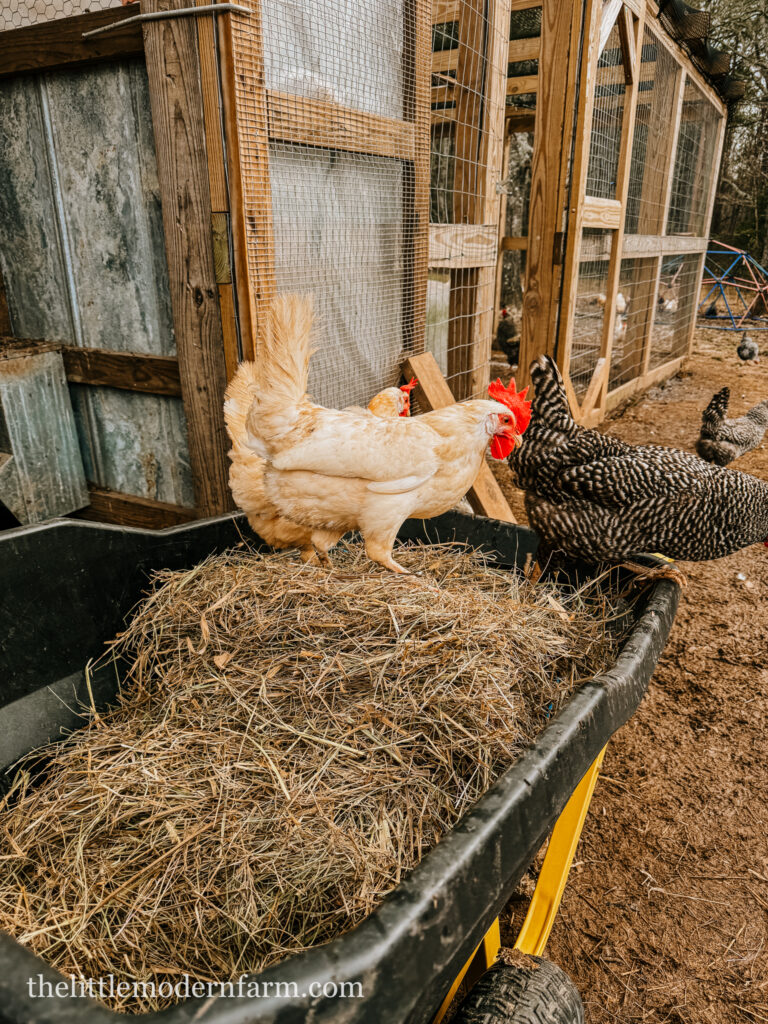
4. Try the Deep Litter Method
The deep litter method is a great way to have a low maintenance chicken run while decreasing the amount of mud.
The deep litter method uses materials like wood shavings and straw on the floor of the run directly on top of the ground.
As chickens naturally scratch and peck the materials, as well as adding manure, the microbes in the soil compost the bedding. This naturally creates heat, has very little odor, and decreases pathogens.
All you need to do to maintain the bedding is add more and occasionally turn it.
The bedding is very absorbent and decreases the amount of moisture in the soil and the amount of mud overall.
It’s important to know that there is a difference in the deep litter method and the deep bedding methods.
Deep litter is accomplished directly on top of the soil where it can interact with the microbes in the soil producing compost.
Deep bedding is typically done inside the coop where there is a wood or concrete floor. The bedding will not break down over time, but it will still produce a dry layer.
Deep bedding will periodically have to be removed and placed in a compost pile to compost.
5. Use Gravel in High-Traffic Areas
If you are having trouble with mud in the high traffic areas, adding gravel can help.
Gravel isn’t great for the chicken’s feet, so I wouldn’t recommend it as your primary coop bedding. However, it can be a great solution to areas that tend to get more muddy than others.
You might consider adding a layer of gravel to:
- The coop entrance
- Under waterers
- Under feeders
- Paths your chickens take often.
A gravel area can help to create a barrier between moisture and the soil and decrease the amount of mud on the surface.
If you decide to use gravel in your coop, it’s important to spray it down periodically to help wash away manure and other waste.
What Kind of Gravel Is Best for a Chicken Run?
Small pea gravel is a good choice for the run. You don’t want to use large or sharp rocks that could potentially injure your flock’s feet.
Never add a plastic membrane below the gravel layer. This will prevent manure from breaking down and create bacteria and smells.
If you are going to add gravel, lay it on thick and consider using a border to keep it in place.
6. Move the Waterer to Keep The Chicken Run From Turning to Mud
Chickens are notorious mess makers. A waterer in your run will quickly become a wet, muddy area if they have anything to do with it.
So how do you keep waterers from making the chicken run muddy? There are a couple of different solutions.
Move the waterer out of the run entirely if you are able. Hanging the waterer from the ceiling in the coop is a great alternative.
Generally the coop is enclosed and is much drying than the run. Coops also often have a wooden or concrete floor. If water is spilled, it will not create mud.
Another option is to place something solid underneath the water and elevate it. Keeping it off the ground and on a solid surface prevents it from sitting directly on the ground and creating mud.
Check your waterers frequently for leaks. A leaking waterer not only creates a mess, but will also decrease the amount of water available to your flock.
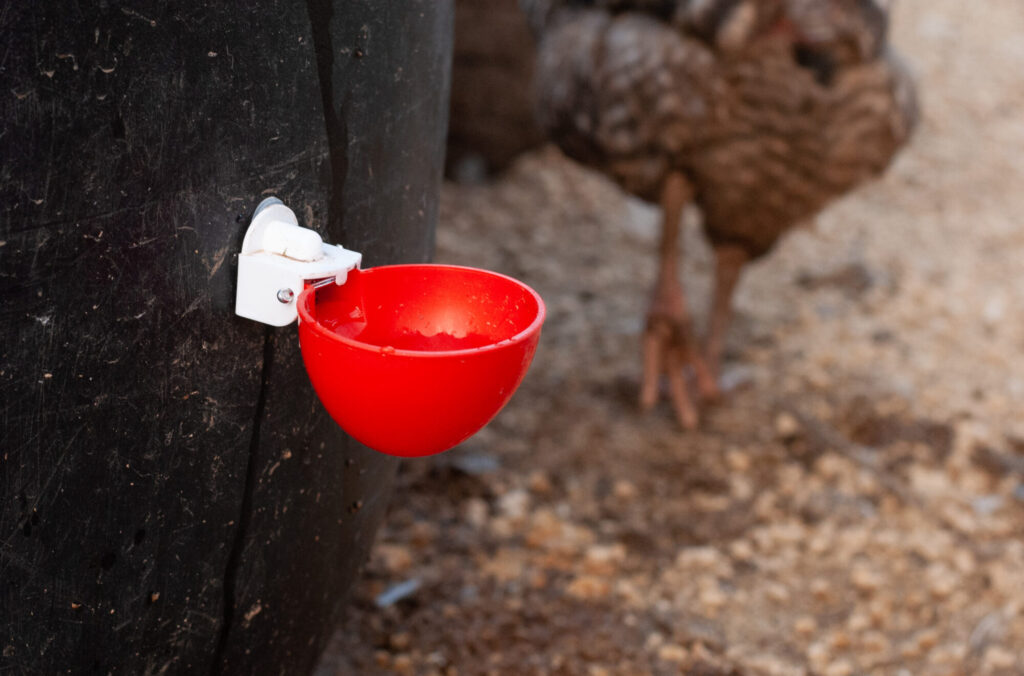
Using a bell type watering system or a chicken nipple are also great alternatives that will decrease the amount of spillage from a traditional waterer.
This is a small change that can make a surprisingly large difference.
Check out how I create our bulk chicken waterer.
7. Protect the Ground Around the Coop Door
The area around the coop door can become muddy quickly. It’s important to address this area often if you want to prevent a muddy coop.
You can consider a lot of different material for the coop doors.
Some of my favorite are:
- Pea gravel
- Stone pavers
- wood chips
- Large stepping stones
Be sure to give a little extra attention to this area since it is the highest traffic area in your coop.
8. Give Chickens a Dry Area During Heavy Rain
Instead of trying to make every inch of your chicken run dry, try creating a dry area instead.
This will be more cost effective while still providing a place for your chickens to escape heavy rains.
You can do this by creating a covered section of your run with a tarp, or roofing.
A lean-to against the coop wall would also be a great way to add a dry area. Just make sure it’s sturdy and doesn’t fall and injure your flock.
Try creating a covered dust bath area. The spots where chickens like to dust bathe can quickly become a mud puddle. Add a roof or cover over this area if possible.
There are lots of ways to be creative with creating dry areas in your coop.
9. Don’t Forget About the Soil Underneath
The problem may not be the surface of the run. It might be the type of soil you have.
Compacted soil will prevent water from draining into the ground. This leaves no option but for water to stand on the surface.
I frequently have this problem with our thick clay soil here in the deep south. This type of soil will quickly become a sticky mess.
Assess the type of soil you have and consider your run bedding accordingly.
If you have thick clay like me it’s important to make sure you have proper drainage in your run.
No amount of bedding will fix that.
What Is the Best Ground Cover for a Chicken Run?
| Ground Cover | Good for Mud | Cost | Maintenance | Best Use |
| Wood chips | Excellent | Low | Moderate | General runs |
| Gravel | Excellent | Moderate | Low | High traffic |
| Straw | Moderate | Low | High | Temporary solution |
| Sand | Variable | Moderate | Moderate | Certain setups |
| Grass | Poor long-term | Low | High | Large runs |
| Bare soil | Poor | Free | High | Temporary |
There truly isn’t a universal answer for the correct ground cover that will prevent mud in your chicken run.
You will need to assess what is available to you as well as your climate, drainage, and soil type.
Sometimes using a combination is useful.
For example, you may need to address your drainage, use wood chips in some areas and gravel in others.
What NOT to Put in a Muddy Chicken Run
Don’t Just Add More Fine Mulch
Fine mulch will break down fast. It also won’t create the thick layer you need to create a barrier between the ground and the moisture.
An exception to this is horse pellets. I’ve often used this is a run and it is great for absorption.
Don’t Ignore Standing Water
If you have a problem with standing water in your chicken run, don’t just ignore it. It’s important to reroute standing water either with a drain, grading, or gutters.
Don’t Put Chickens on Permanently Saturated Ground
Putting your chickens on permanently saturated ground will inevitably lead to food wounds and infection. Chickens must have a dry spot to escape the moisture.
Don’t Assume More Bedding Will Fix Poor Drainage
More bedding can actually have opposite results trapping moisture and standing water. Using the right type of bedding and addressing drainage is key.
Don’t Use Materials That Could Be Dangerous to Chickens
Using bedding made of cedar can damage the chicken’s respiratory system. Sharp rocks will cause injuries to the chickens feet, fine-grained sands can also cause respiratory issues.
Knowing the material you shouldn’t use is just as important as choosing the right materials for the job.
How to Fix a Chicken Run That Is Already Muddy
- Step 1: Remove standing water
- Step 2: Identify where the water is coming from
- Step 3: Correct drainage/runoff
- Step 4: Allow the worst areas to dry if possible
- Step 5: Add a stable base where necessary
- Step 6: Add wood chips or another suitable ground covering
- Step 7: Cover the highest-traffic areas
- Step 8: Try to protect the run from future rainfall
How to Keep a Chicken Run From Turning to Mud in Winter and During Rainy Seasons
Winter here in the Deep South is very rainy. In fact, when I picture Christmas here it always includes rain.
Winter can be the hardest time to keep your chicken run dry and free from mud due to prolonged days of heavy rain.
It’s best to stay on top of the chicken run during this time.
You can:
- Provide a cover for the run
- Address high traffic areas often
- Apply multiple layers of bedding such as wood chips.
- Make sure your run is draining properly.
Staying on top of the run is the easiest way to ensure your flock has a clean and dry place to spend their days.
Frequently Asked Questions
What is the best thing to put in a muddy chicken run?
Hardwood chips are the best for a muddy chicken run because they sit on top of the soil. Larger chips are much better than wood shavings.
How do I stop my chicken run from getting muddy?
Ensure the run has proper drainage, divert any water away from the run, provide a cover for the run, and provide proper ground cover.
Are wood chips good for a chicken run?
Yes, some wood chips work well in a chicken run. Larger, hardwood chips are best. Do not use cedar shavings in a chicken run.
Should I put gravel in my chicken run?
Pea gravel will work well in a chicken run. Be sure to layer it around 2-3 inches thick. Do not use sharp gravel in a chicken run. It can injure your flock’s feet.
How do I improve drainage in a chicken run?
Identify any low-lying areas where water stands. Grade the areas and consider installing french drain for extra drainage.
Can chickens live on muddy ground?
While chickens can tolerate some mud, constant muddy living conditions can be bad for their health. Mud causes foot injuries as well as having parasites that are harmful to chickens.
Is sand good for a muddy chicken run?
Certain types of sand are suitable for a chicken run. Course construction sand or sand specifically designed for chickens is best because it won’t irritate their respiratory tracts.
How often should I replace chicken run bedding?
There isn’t a set time for how often you should replace chicken run bedding. Once the bedding starts to break down, or is very soiled, add new layers on top. If your bedding is building up, remove it and compost it.
Final Thoughts On How To Keep A Chicken Run From Turning To Mud
Keeping a chicken run from turning to mud is going to be unique to your particular climate and set up.
Here in the Deep South rainy weather, staying on top of the run with wood chips and drainage solutions are the best method.
Monitor your particular run and address individual problems such as standing water and water running onto the run as needed.
If you enjoyed this article, please share it!
More Chicken Articles You’ll Love
- How Much Water Do Chickens Drink In A Day?
- Why Did My Chickens Stop Laying Eggs?
- The Real Cost of Raising 25 Chickens For Meat
- At What Age Will Hens Start Laying Eggs?
Chicken Products I Love
- Chicken Wound First Aid Kit
- The Best Bulk Feeders and Waterers
- Chicken Care Must Haves
- Chicken Products
More From The Farm
If you’re new to keeping chickens, or want to add a rooster to your flock, you might be wondering how many hens per rooster.
Most articles online will tell you the minimum is 10 hens per rooster. However, after keeping a large flock of laying hens for years, I’ve learned that it isn’t always that simple.

Leave a Reply