As a chicken owner, water can be easily overlooked. That is, until you realize how fast your birds will go through it. So how much water do chickens drink in a day?
Chickens need unlimited access to fresh water. However, the amount they actually consume will depend on a lot of different factors. Some of those factors are:
- Age
- Body size
- Whether they’re laying
- Whether they’re meat birds
- Feed consumption
- Temperature
- Humidity
- Activity level
- Health
Your flock drinking a lot of water isn’t a warning sign; it’s actually healthy and normal. However, if your flock suddenly starts drinking more water than usual, then there’s a problem.
I’ll break down their daily water needs by age and type. I’ll also explain how summer heat can dramatically increase their water consumption.
How Much Water Does a Chicken Drink Per Day?
There isn’t an exact number on that because the amount a chicken will drink in a day will vary. However, most adult chickens average around 500 ml of water per day.
This number will increase or decrease depending on the chicken’s age, the season, what type of chicken they are, their coop location, and whether or not they are free range.
As you can see, there are many different factors that can determine how much water your chickens drink.
A chicken’s water intake should be more of an estimate rather than a solid amount per day.
Like us, there are factors that will affect the amount they drink. Those factors will change each day.
Chicken Water Consumption by Age & Type
Chicks
| Age | Approximate Water Needs | Notes |
| 0–1 week | 25-50ml | Small amounts, frequent drinking |
| 1–2 weeks | 50-75ml | Consumption begins increasing |
| 2–4 weeks | 75-150ml | Growing rapidly |
| 4–6 weeks | 150-300ml | Increasing substantially with feed intake |
| 6+ weeks | 300-700ml | Depends on breed and size |
Young chicks can easily become dehydrated. It’s important to know that these numbers are not exact, but are estimates. Be sure to give them plenty of fresh drinking water!
How Much Water Do Pullets Drink?
A pullet is a young female chicken that hasn’t reached reproductive maturity yet.
Her water consumption will be similar to a chick’s, with the exception of when she begins laying eggs. Some will begin to lay eggs sooner than others depending on the breed of chicken.
Pullets
| Pullet Age | Approximate Daily Water |
| 6–10 weeks | 250-500ml |
| 10–14 weeks | 500-600ml |
| 14–18 weeks | 500-600ml |
| 18+ weeks | 600-875ml |
Water consumption will increase gradually as the pullets get older. These numbers will also depend on how much feed the chicken is eating.
Also, in hot weather, their water consumption will be a lot more.
How Much Water Do Laying Hens Drink Per Day?
This is likely to be one of your strongest search sections.
If a hen is laying, her water intake will double that of a non-laying hen. That’s because eggs contain a lot of water.
A hen’s water consumption is also determined by her breed and the temperature outside.
Laying Hens
| Type of Hen | Approximate Daily Water |
| Small/light breed | Up to 950ml- These breeds have higher metabolisms and drink proportionately more water. |
| Average laying hen | 600-750ml |
| Large/heavy breed | 700-750ml |
| Hen during hot weather | 1,400ml. Hens require a lot of water when temperatures rise. |
Do Chickens Drink More Water When They’re Laying?
Hens will often consume twice as much water when they are laying than when they’re not
The amount of food they consume also affects the amount of water they drink. On average, a hen will drink twice as much as the weight of the food it eats.
For example:
Eating ½ pound of food would = 1 pound or 2 cups of water
If a hen stops drinking water, her feed consumption will drop dramatically because water stimulates her appetite.
Each individual egg is around 70% water. Hens will consume around double their normal intake on the days they actually lay an egg.
If a hen doesn’t have enough water, she will not eat feed. Without food and water, egg production will drop dramatically and very quickly.
This is why it is especially important to provide her with plenty of drinking water on hot days.
How Much Water Do Meat Birds Drink?
Meat birds, like the Cornish Cross, consume a lot more water than other breeds.
This is because they grow extremely fast and consume a lot of feed.
Here is an estimate of how much water meat birds consume by week.
| Age of Broiler | Approximate Water Needs |
| 1 week | 1.2 oz per chick/day |
| 2-3weeks | 3.8-6.4 oz per chick/day |
| 4-5weeks | 13-19 oz per chick/day |
| 6–8 weeks | 26-51 oz per chick/day |
Why Do Meat Chickens Drink So Much?
As I mentioned above, feed consumption and water consumption are directly tied together. The more feed a chicken consumes, the more water they’ll drink.
Meat birds are bred to gain weight very quickly. To do that, they need a lot of high-protein feed.
How Much More Water Do Chickens Need in 90–100°F Heat?
*This post may contain affiliate links which means I make a small commission at no extra cost to you. Read my full disclosure here.*
Raising chickens here in the Deep South is very challenging during the summer.
Our summers aren’t just hot, they’re scorching. Temperatures easily top 100°F with extremely high humidity.
During heat waves, chickens need dramatically more water.
Chickens don’t sweat as we do. In order to cool themselves down, they will pant.
Panting allows moisture to evaporate from their respiratory tracts, which pulls heat off with it.
If a chicken is panting excessively, they will lose a lot of water in their bodies.
They have to drink a lot more water to make up for the panting.
Humidity will also affect how much water the chicken needs.
If there is high humidity in the air, moisture will not evaporate through panting. This means the chicken will retain more heat and need more water to cool.
Hot Weather Table
| Temperature | Approx. Water Needed Per Day | Water per Pound of Feed |
| 70–80°F | 4-6 cups | 2- 3 pints |
| 80–90°F | 6-10 cups | 3-5 Pints |
| 90–100°F | 10-16 cups | 2 ½ quarts – 1gallon |
| 100°F+ | 16+ | 1+ gallon |
Water consumption will increase dramatically during heat stress. If you live in a hot climate as I do, be sure to plan your waterers around the hottest weather months instead of mild temperature times.
How Much Water Should You Put Out for Chickens in Extreme Heat?
You might be wondering how much water you actually need to have available for your chickens during extreme heat.
You want a waterer that holds more capacity than their expected daily consumption.
For example:
If your flock needs 2 gallons of water per day, you’ll need a waterer that holds more than two gallons of water.
This will ensure your flock has more than enough water for high-heat days.
Here are some Practical recommendations:
- Provide multiple water stations
- Put water in shaded locations
- Keep backup water available
- Check water several times during extreme heat
- Use larger-capacity waterers for large flocks
- Consider automatic watering systems for convenience
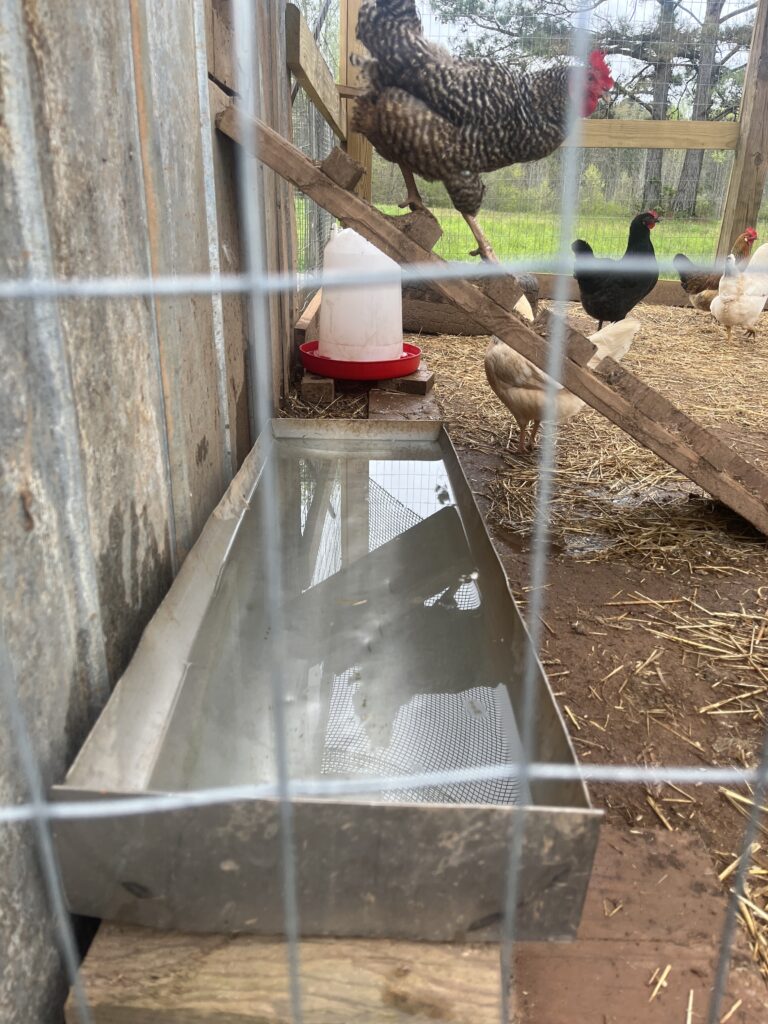
I personally use a large waterer here in the Deep South. I included DIY instructions on how to build your own.
How Much Water Do Chickens Need in Winter?
There are a lot of misconceptions about a chicken’s water needs during the winter. While they might not need as much water as they did during the summer, they still require adequate amounts to stay healthy.
During cool weather, your flock still needs normal access to water.
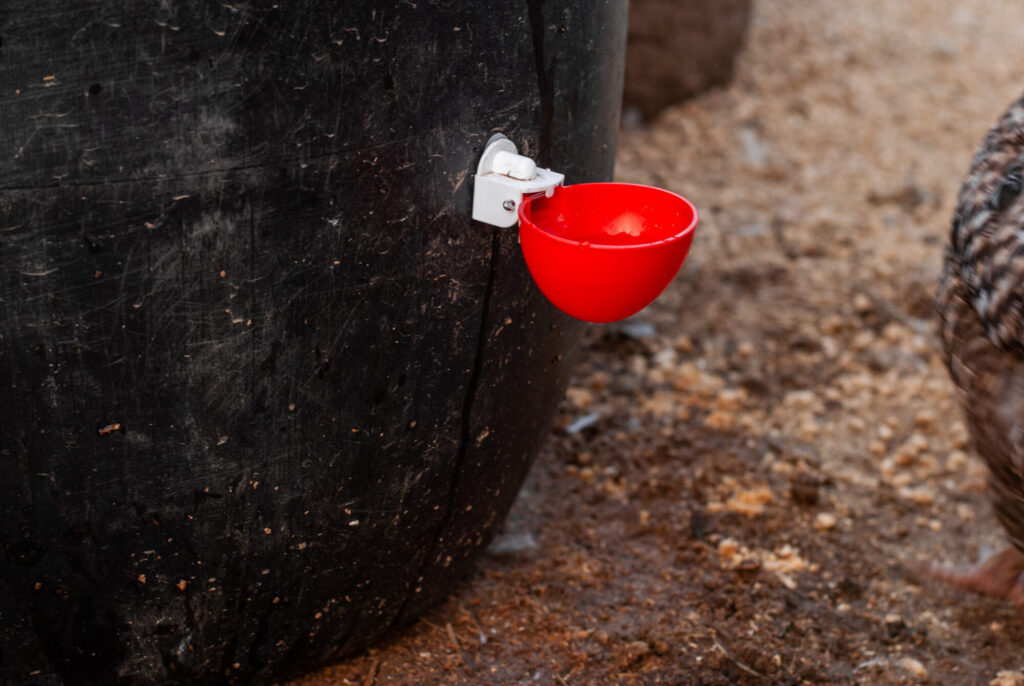
If temperatures drop to freezing, it’s important to keep their water from freezing. You can do this by busting it up frequently, using black waterers to maintain heat, or using a warming waterer.
While snow rarely happens for us here in the Deep South, it does happen occasionally. If you live in a snowy climate, be sure to supply your flock with water and don’t rely on snow as the primary water source.
Cold weather doesn’t eliminate the need for fresh water.
Signs Your Chickens Aren’t Getting Enough Water
Providing your flock with enough water is essential. You should also look for signs that your flock isn’t getting enough.
Some of the signs you should look for are:
- Lethargy
- Reduced appetite
- Reduced egg production
- Panting
- Weakness
- Dehydration
- Crowding around water
- Competition at the waterer
What Does a Dehydrated Chicken Look Like?
Panting in your chickens is a sign they’re hot, but not necessarily dehydrated.
Dehydration is very dangerous and can harm or even kill your chicken.
Here are some signs of dehydration:
- Lethargy
- Loss of weight
- A pale comb and wattle
- Watery Diarrhea
- Droopy or spread wings
- Sunken eyes
- Sticky mouth
If your chicken is displaying any of these signs of dehydration, you should treat it immediately.
See my previous post on signs of heat stroke in chickens, and the use of baking soda for chickens.
How Often Should You Change Chicken Water?
Not only should you provide an adequate amount of water for your flock, but you should also change it regularly.
Stagnant water can quickly grow algae, which isn’t good for your flock’s health. This is especially necessary in the summertime.
You should change the water daily if you have a smaller waterer. Larger waterers that hold more water should be changed a couple of times a week or when they start showing signs of algae growth.
During the summer, providing fresh cool water will help prevent your flock from being overheated while providing them with adequate water.
You should also clean your waterers as needed. Be sure to scrub off any chicken droppings or bedding that has gotten in your waterers.
How Many Waterers Does Your Flock Need?
The number of waterers you need will be decided by the number of chickens you have in your flock.
I always suggest having at least 2 different watering stations available. That way, if one waterer is knocked over or damaged, there is a backup.
Also, providing more watering stations means your flock won’t have to crowd around a single waterer. This allows each chicken to have free-choice water whenever they need it.
Each waterer should hold the minimum capacity needed for your flock size.
Having multiple watering stations is especially good for:
- Large flocks
- Meat birds
- Free-range chickens
- Hot climates
- Uneven flock dynamics
Example Waterer Sizes
| Flock Size | Suggested Water Capacity |
| 5 chickens | 2 gallon |
| 10 chickens | 3 gallon |
| 20 chickens | 5+ gallon |
| 25 chickens | 7+ gallon |
| 50 chickens | 13+ gallon |
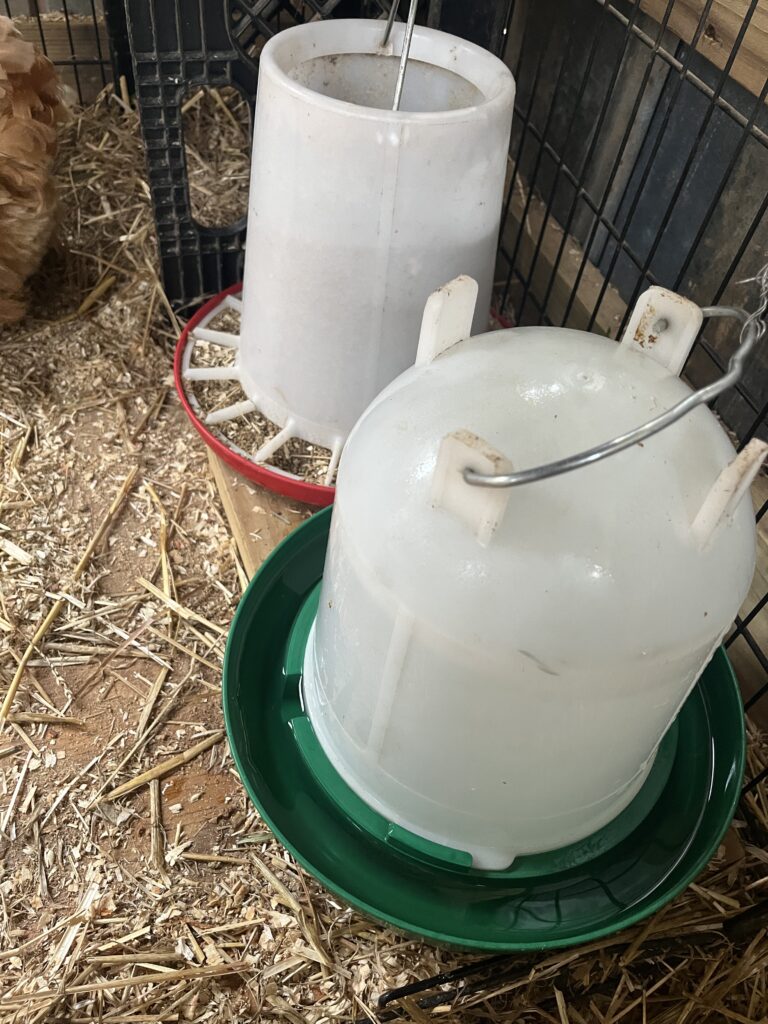
Watering designs can vary drastically. Here are a few of my favorites and ones I personally own for my flock.
Best Chicken Watering Systems
Large-Capacity Waterers
Best for:
- Large flocks
- Raising Meat Chickens
- Busy families
Automatic Chicken Waterers
Best for:
- Busy families
- Large flocks
- Traveling out of town
Nipple Waterers
Discuss:
- Cleanliness
- Reduced contamination
- Spillage
- Chicks learning to drink
Multiple Small Water Stations
Useful during:
90–100°F weather.
Other Waterers I Love
Should You Give Chickens Electrolytes?
Giving your chickens electrolytes can be helpful in certain situations.
It’s kind of like us when we have a virus or bug, electrolytes can replenish what is depleted in our bodies.
Like us, extreme heat and illness can deplete much-needed nutrients.
Electrolyte deficiencies can lead to disorders such as wry neck.
However, electrolytes shouldn’t be given to your flock every day.
Situations where electrolytes are helpful are:
- Extreme heat
- Chicks recovering from an injury or illness
- New chicks arriving on your farm
Always follow your package instructions and be sure to give fresh water alongside electrolytes.
Electrolytes I use are:
How to Keep Chicken Water Cool in the Summer
There are several ways to keep your flock’s water cool during the summer months. With our Deep South summers,s we have to work hard at making sure our flock is hydrated and healthy during intense heat.
Some of the ways we keep our flock cool are
- Providing them with plenty of shade
- Keeping waterers in the shade and out of direct sunlight.
- Using multiple watering areas
- Refilling waterers often with cool water
- Freezing water in bottles and adding the ice to the waterers
- Providing waterers with a larger capacity
- Checking waterers often
Keeping a check on your waterers is honestly the best way to make sure your flock has fresh, cool water. We check ours multiple times a day and refill them as needed.
Can Chickens Drink Too Much Water?
If you’re noticing an increase in the amount of water your chickens are drinking, it might not be a reason to be concerned.
Chickens can increase water consumption for many different reasons, including:
- Hot weather
- Increased feed consumption
- Egg production
- Growth
But dramatically increased water consumption without an obvious environmental reason can sometimes mean there is a problem.
Pay attention to your chickens’ water habits and get with your veterinarian if you feel like something is wrong.
Why Are My Chickens Suddenly Drinking More Water?
Create a quick troubleshooting chart:
| Possible Reason | Normal? |
| Hot weather | ✅ |
| Increased feed consumption | ✅ |
| Heavy laying | ✅ |
| Rapid growth | ✅ |
| More activity | ✅ |
| Heat stress | ⚠️ |
| Sudden unexplained increase | ⚠️ |
| Illness | ⚠️ |
Chicken Watering Mistakes to Avoid
- Mistake #1: Providing only one waterer
- Mistake #2: Putting the waterer in full sun
- Mistake #3: Letting water run empty
- Mistake #4: Not checking water during heat waves
- Mistake #5: Allowing bedding and poop into the water
- Mistake #6: Assuming chickens can get enough water from food
- Mistake #7: Relying on snow during winter
- Mistake #8: Using electrolytes as a substitute for clean water
Chicken Water Calculator
If you’re still wondering how much water your flock needs, check out my chicken water calculator.
You will enter:
Number of chickens → Age/type → Temperature
The calculator will give you an estimate on how much water you’ll need depending on the type of chickens you’re raising, the number in your flock, and the temperature outside.
This will help you plan better for the size and capacity of waterers in the future.
Frequently Asked Questions
How much water does a chicken drink a day?
Chickens drink an average of 500ml of water per day.
How much water does a laying hen drink per day?
Laying hens can drink up to 1,400ml of water per day in very hot weather
How much water do chicks drink?
A chick’s water consumption will vary by age. They range from 50ml up to 700ml per day depending on age and breed.
Do chickens drink more water in hot weather?
Yes, during hot weather, chickens will pant. This causes them to lose moisture through the respiratory tract. They will need considerably more water to stay hydrated.
How long can chickens go without water?
Chickens cannot go very long without drinking water. Within 24 hours, feed consumption and egg production will drop dramatically.
Can chickens drink too much water?
Chickens will consume more water depending on the weather, and if they are actively laying eggs. However, if you notice a sudden increase in the amount of water your flock is drinking, you should get with your veterinarian.
How often should chicken water be changed?
A chicken waterer should be changed very often. The time frame will depend on the size of the waterer. However, if the water starts growing algae or is contaminated, change it immediately.
Do chickens need water at night?
While chickens may not drink as much water at night, you should still provide them with access to their waterer. They lose a lot of moisture at night, and will need to replenish at daylight.
Should chickens have water inside the coop?
It’s ok to put their waterer inside their coop. This will actually help to keep it out of the sun and cooler than if it were outside. However, monitor it closely to ensure it’s not contaminated or hasn’t been knocked over.
Do chickens need electrolytes in hot weather?
Electrolytes can help a chicken recover in extreme heat. Heat causes chickens to pant and lose a lot of moisture through their respiratory system. Always provide them with fresh water along with their electrolytes.
How many waterers do I need for 10 chickens?
Check out my chicken calculator to determine how much water your flock needs!
Final Thoughts on How Much Water Chickens Drink in A Day
Determining how much water your flock needs will take some observations and basic knowledge of how much each breed drinks.
However, providing them with plenty of fresh drinking water will make them happier and healthier.
Consider the temperature outside, the breed of your bird, and whether or not they are laying. This will help you determine how much water your flock needs daily.
If you live somewhere like the Deep South, plan your watering system for the hottest days of the year, not the average days.
If you enjoyed this article, please share it!
More From The Farm
Chicken Tractors are a great way to provide your flock with fresh grass, while keeping them safe from predators in a coop. This DIY chicken tractor is easy and inexpensive to build while also providing head room for you to walk in for feeding and care.

Leave a Reply