Muscadines are the “grape of the South”, and they grow wild here on our farm. With so many coming in each year, muscadine preserves are a must! This muscadine rosemary jalapeno preserves recipe is a yummy twist on a traditional jelly. You have to give it a try!
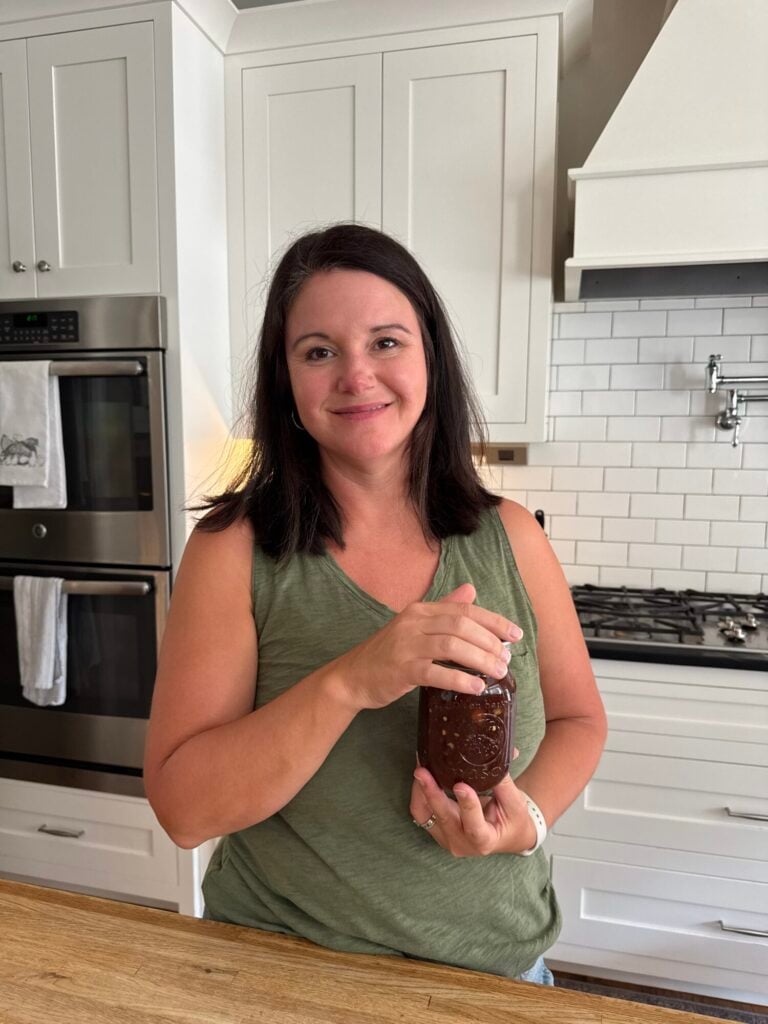
Muscadine Rosemary Jalapeño Preserves are fresh and absolutely delicious! The flavors complement each other very well for a result that is:
- sweet
- slightly spicy
- Has an herbal note
- Very versatile
While this recipe is delicious on toast, it can be used in so many different recipes.
What Are Muscadines?
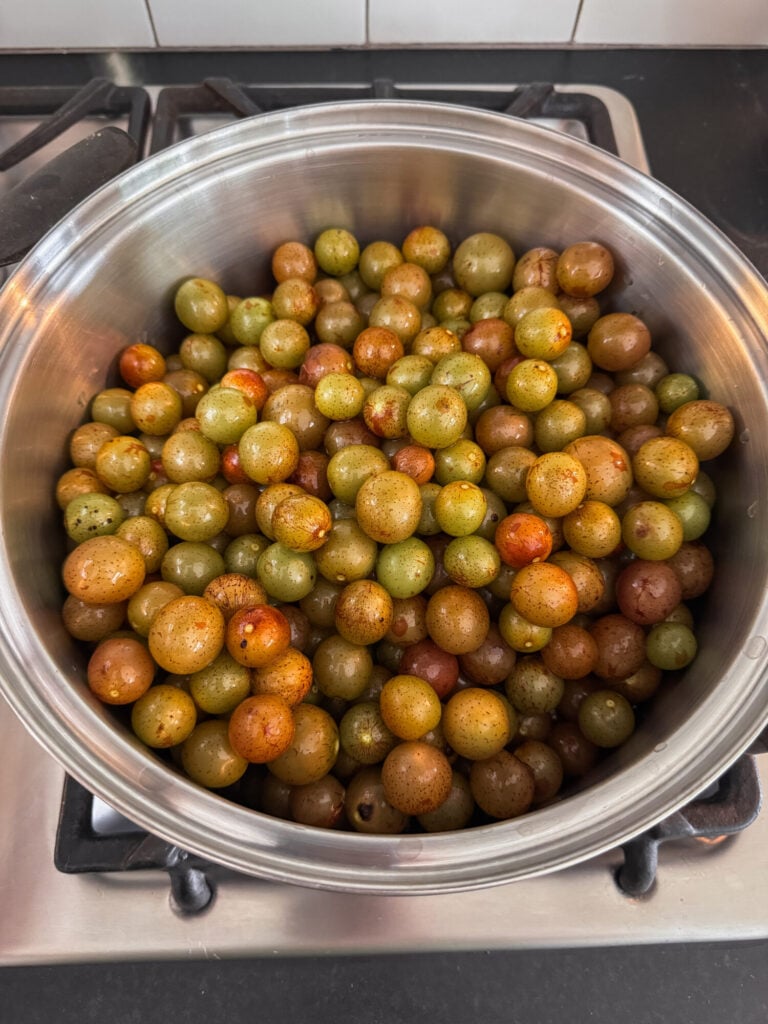
Muscadines are a type of grape that grows in the South. As a child, I loved finding wild muscadines in the woods around our house.
While they are similar to grapes, they have thicker skins and larger seeds than most grapes. This makes them perfect for jellies and jams because of all the natural pectin in the skin of the grapes.
Another common use for them here in the Deep South is wine. We actually have a winery near our home that produces various types of muscadine wine. It’s delicious!
*This post may contain affiliate links which means I make a small commission at no extra cost to you. Read my full disclosure here.*
Muscadine Jam vs. Jelly vs. Preserves
While these terms are often used interchangeably, there is a difference in jelly, jam, and preserves.
Jelly is made from the juice of the fruit. It doesn’t contain any of the pulp or fruit pieces.
Jam is made from mashed fruit. It isn’t as clear as jelly.
Preserves contain crushed pieces of fruit and sometimes the whole fruit. This is technically a preserve recipe because it has pieces of peppers and rosemary, as well as some of the pulp from the muscadines.
Why You’ll Love These Muscadine Preserves
There are many different reasons why you’ll love this recipe. It’s going to be one you return to every year!
Here are just a few of the reasons you’ll love it:
- This is a great way to use up fresh muscadines
- It has just the right amount of heat to give you that sweet and spicy mix.
- Rosemary adds a fresh, herbal note to the preserves
- This is a unique preserve to serve while entertaining.
- The sweet and spicy flavor is excellent with so many different cheeses
- The preserves add a delicious glaze to pork or chicken.
- These preserves make great homemade gifts!
Ingredients for Muscadine Rosemary Jalapeño Preserves
You’ll need a few things to make this muscadine rosemary jalapeño preserves. I have the ingredients growing in my garden, so this recipe came together easily.
Here’s what you’ll need
Muscadines
Fresh muscadines are best, but you can use frozen ones too. Use whatever you have available.
Jalapeño
Jalapeños seem to go wild in the garden at the end of summer. They also tend to be spicier than early-season peppers. Remove the seeds if you want a milder flavor. I personally love the heat.
Fresh Rosemary
Fresh rosemary is important here because it gives the preserves that earthy, almost piney flavor that works surprisingly well with muscadines.
Lemon Juice
Lemon juice brightens up this recipe and gives it so much depth of flavor. Add a little zest for even more flavor!
Sugar
Sugar is one of the most important ingredients in the preserves. It helps give it that jelly-like texture.
How to Make Muscadine Rosemary Jalapeño Preserves
This is a great recipe for beginners because the steps are simple and easy to do.
Step 1: Wash the muscadines
Wash the muscadines and remove the stems. Be sure to give them a good wash to remove any dirt from the surface.
Step 2: Cook and juice the muscadines
Add the water to the pot with the muscadines and bring them to a boil over medium heat. Cook them until they are soft. This takes around 15 minutes.
Use a potato masher to mash the muscadines and remove the juice and pulp.
Step 3: Remove the seeds
Use a food mill or sieve to remove the seeds and skins from the muscadines. I pour them through a fine sieve and use a wooden spoon to press the liquid through.
This is a very important step because you don’t want any seeds or skins in your preserves. Seeds are very bitter and will not taste good.
Return the muscadine juice to the pot and continue to cook it over medium heat.
Step 4: Add the jalapeño, rosemary, lemon juice, lemon zest, salt, and sugar
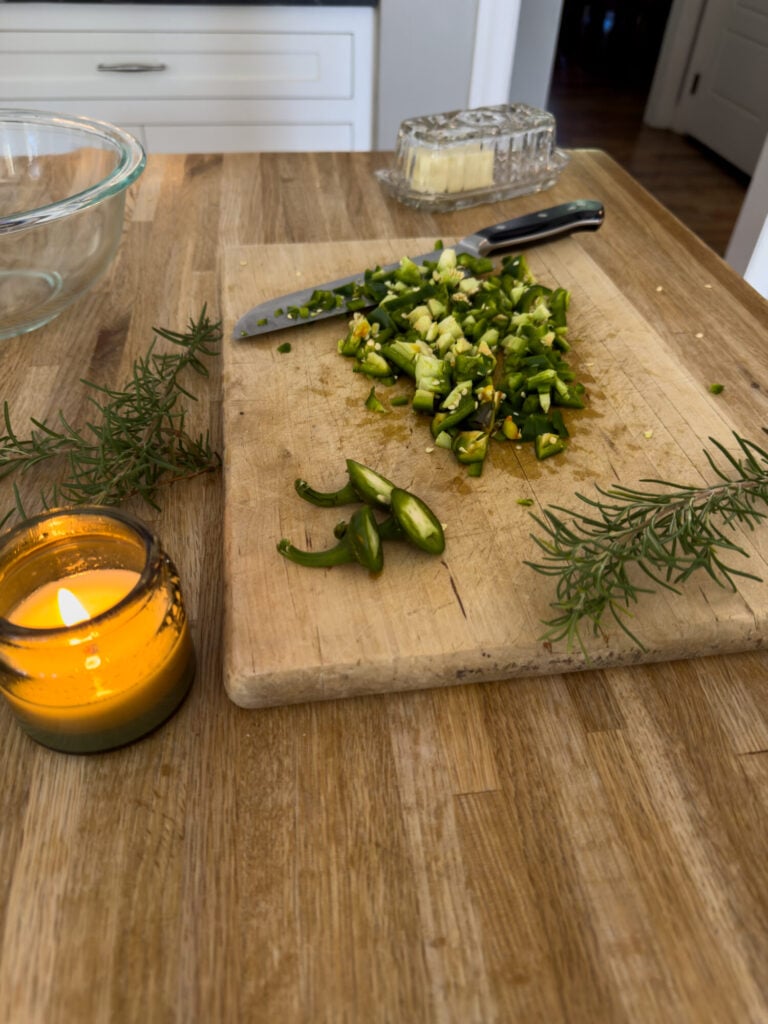
Finely chop the jalapeños. You can remove the seeds if you want a milder flavor.
Mince the rosemary and add it to the chopped jalapeño.
Combine the jalapeño, rosemary, lemon juice, lemon zest, salt, and sugar in the pot with the muscadine juice.
Helpful Tip: If you don’t want a strong rosemary flavor, add the full stems to the pot while it’s cooking and remove them before jarring.
Step 5: Cook the preserves until they’re thick
Cook the preserves down until they are thick. Be careful not to scorch them. The sugars in this recipe can easily burn and stick to the bottom of your pot.
You will know the preserves are done by sticking a spoon in the mixture and removing it. If the preserves are glossy and coat the back of a spoon, they are finished.
You can also place a plate into the freezer to get very cold. Add a small spoonful of the preserves to the cold plate. If it wrinkles and holds its shape, it’s finished.
The preserves will continue to thicken as they cool
Step 6: Cool and store
Transfer the preserves to glass storage jars with lids. You can store the preserves in the fridge for up to three months.
You can also seal the jars in a water bath canner. Be sure to follow water bath canning guidelines.
How to Tell When Muscadine Preserves Are Done
Making jams, jellies, and preserves can be a little tricky in the beginning. You will eventually learn how to spot when the preserves are done.
Here are a few methods I use
- The spoon test-dip your spoon into the preserves and remove it. If the preserves coat the back of the spoon and are glossy, they’re done.
- Consistency-jams, jellies, and preserves should have a syrup-like consistency when they are hot. As the liquid cools, the pectin molecules stop bouncing around and will bond with the sugars in the jam. This creates a spiderweb of sorts that traps liquid in the preserves.
- The plate test– put a plate into the freezer while you cook your preserves. Remove the plate and add a small amount of jam to it. If the jam wrinkles and holds its shape, it’s done.
Don’t worry if your preserves seem slightly thinner than you expected while they’re hot. They will continue to thicken as they cool.
How to Serve Muscadine Rosemary Jalapeño Preserves
These preserves are so versatile! You’re going to love finding different ways to eat them.
Serve with Cheese
- baked brie with preserves on top
- goat cheese served with herb crackers
- cream cheese with preserves on top and served with crackers
- Serve with sharp cheddar or smoky gouda on a charcuterie board
With Bread
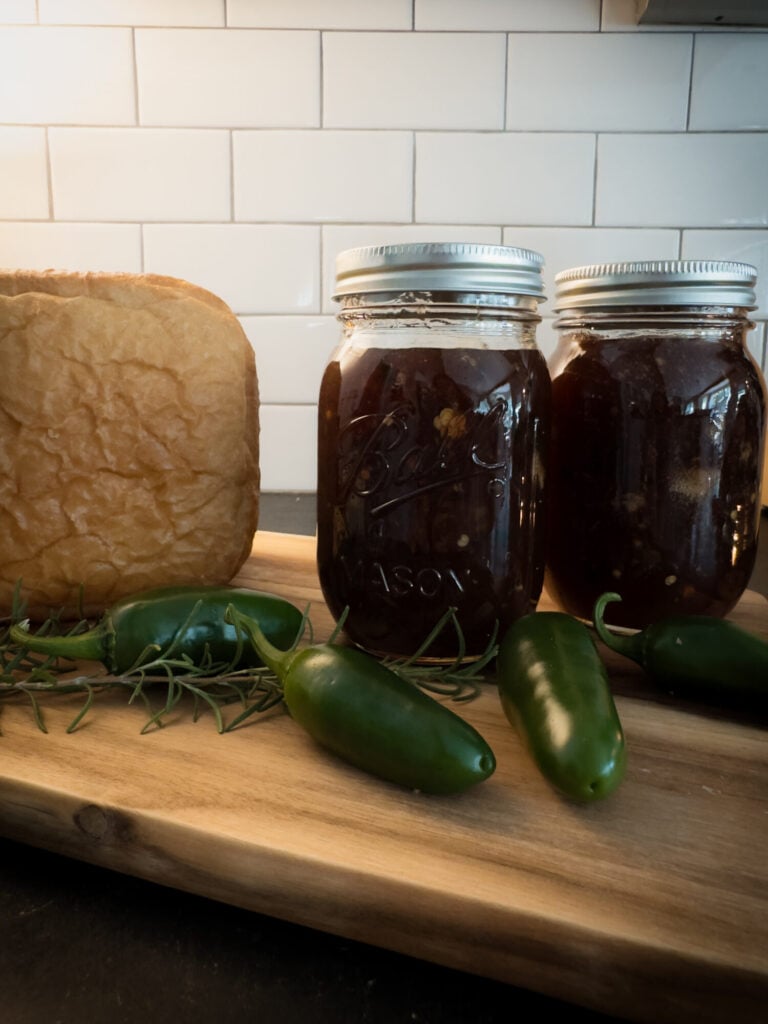
- These preserves are perfect with sourdough
- Serve the preserves with hot biscuits and soft butter
- Serve on cornbread for a good mix-up.
With Meat
- Use the preserves as a glaze for pork tenderloin
- Glaze a roasted chicken
- Glaze grilled chicken, but be careful not to let it burn
- Serve it alongside smoked pork and cornbread
These sweet-tart preserves work almost like a fruit-based finishing sauce.
Something Unexpected
Serve a spoonful over:
- vanilla ice cream
- cheesecake
- pound cake
The contrast between the sweet muscadines and spicy jalapeño would be fantastic.
Tips for Making the Best Muscadine Preserves
Use ripe muscadines
Be sure to use ripe muscadines. Late summer and early fall are when muscadines are most ripe in the South.
Don’t overdo the rosemary
Rosemary is great, but too much will overpower your preserves. It has a very strong flavor.
Adjust the jalapeño
Start out with a small amount of Jalapeño and increase it as needed. In late summer jalapeños tend to have more heat.
Don’t judge the thickness while it’s hot
Your preserves will thicken more as it cools. Overcooking it will cause it to stick to the pot.
Taste before jarring
The flavors will mesh more as it cools and sits, but give it a try before jarring. You can adjust the heat if needed.
Can You Make Muscadine Preserves Ahead of Time?
You can absolutely make this jam ahead of time and store it in the fridge for up to 3 months.
You can also can it for shelf-stable storage using approved canning methods.
Make a large batch and keep it on hand for:
- Thanksgiving
- Christmas
- Fall entertaining
- Last-minute guests
- Homemade gifts
This is really a versatile recipe that your friends and family will love. It’s unique and delicious in so many different settings.
Frequently Asked Questions
Can I use frozen muscadines?
Yes. Frozen muscadines would be fine in this recipe. You may have to extend your boiling time to account for the extra moisture.
Do I have to remove muscadine seeds?
Yes, the muscadine seeds have to be removed. They are bitter when they are crushed, and they’ll also add an unsavory texture to the preserves.
Can I make muscadine preserves without jalapeño?
Yes, the rosemary and muscadine combination is great on its own.
Can I use dried rosemary?
Fresh rosemary is always better, if you choose to use dried rosemary, start with ½ teaspoon in this recipe.
How spicy are these muscadine preserves?
If you leave the seeds in the jalapeño, I’d rate the recipe as a medium spice. However, removing the seeds makes it more mild.
What can I serve with muscadine preserves?
There are lots of serving ideas for muscadine preserves. See the ideas I noted above.
How should I store muscadine preserves?
These preserves can be stored in the fridge for up to 3 months. I store them in a glass storage container with a lid.
Can I can muscadine preserves?
I have not tested this specific recipe for canning purposes. You should use approved and tested canning recipes and guidelines for shelf-stable storage.
More Southern Recipes You’ll Love
Check out these other fall recipes you’re sure to love: =
- Deep South cornbread dressing
- apple cider cocktail
- Apple cheese casserole
- leftover/frugal recipes
- Spicy sausage stuffed acorn squash
- sourdough chicken pot pie
Helpful Equipment
Final Thoughts on Muscadine Rosemary Jalapeno Preserves
You are going to love this muscadine preserves recipe with rosemary and jalapeño. It has a unique combination of flavors and textures that are so versatile.
Give it a try, and share it with your family and friends!
More From The Farm
This Blueberry Bourbon Jam recipe is a fun twist on the classic blueberry jam we all love. By adding a hint of bourbon, this jam gets a unique, rich flavor that’s a bit more grown-up but still super tasty.
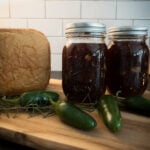
Muscadine Rosemary Jalapeño Preserves
Equipment
- 1 heavy bottom pot
- 1 food mill
- 2 half-pint canning jars with lids
- 1 Canning funnel
Ingredients
- 4 cups muscadines washed and stems removed
- 2 cups granulated sugar
- 1 medium jalapeño finely minced
- 1 large sprig fresh rosemary
- 2 tablespoons fresh lemon juice
- ½ teaspoon lemon zest
- ¼ teaspoon salt
- ½ cup water
Instructions
- Place the muscadines and water in a large saucepan over medium heat. Cook for about 10–15 minutes, stirring occasionally, until the grapes soften and begin releasing their juices.
- Mash them gently with a potato masher.
- Pour the cooked muscadines through a food mill or fine-mesh sieve, pressing firmly to extract as much pulp and juice as possible.
- Return approximately 3 cups of muscadine pulp/juice to the saucepan.
- Add sugar, minced jalapeño, rosemary sprig, lemon juice, lemon zest, and salt.
- Bring the mixture to a boil over medium-high heat, stirring frequently.
- Lower the heat slightly and continue cooking for 20–30 minutes, stirring frequently, until the mixture becomes glossy and noticeably thickened.
- Remove the rosemary during the last few minutes if you want a subtle rosemary flavor. Leave it in longer for a stronger flavor.
- Transfer the preserves to clean jars and let it cool. The preserves will thicken as they cool.
- Refrigerate for up to 3 months.

Leave a Reply